



- This event has passed.
Theatrum Mundi
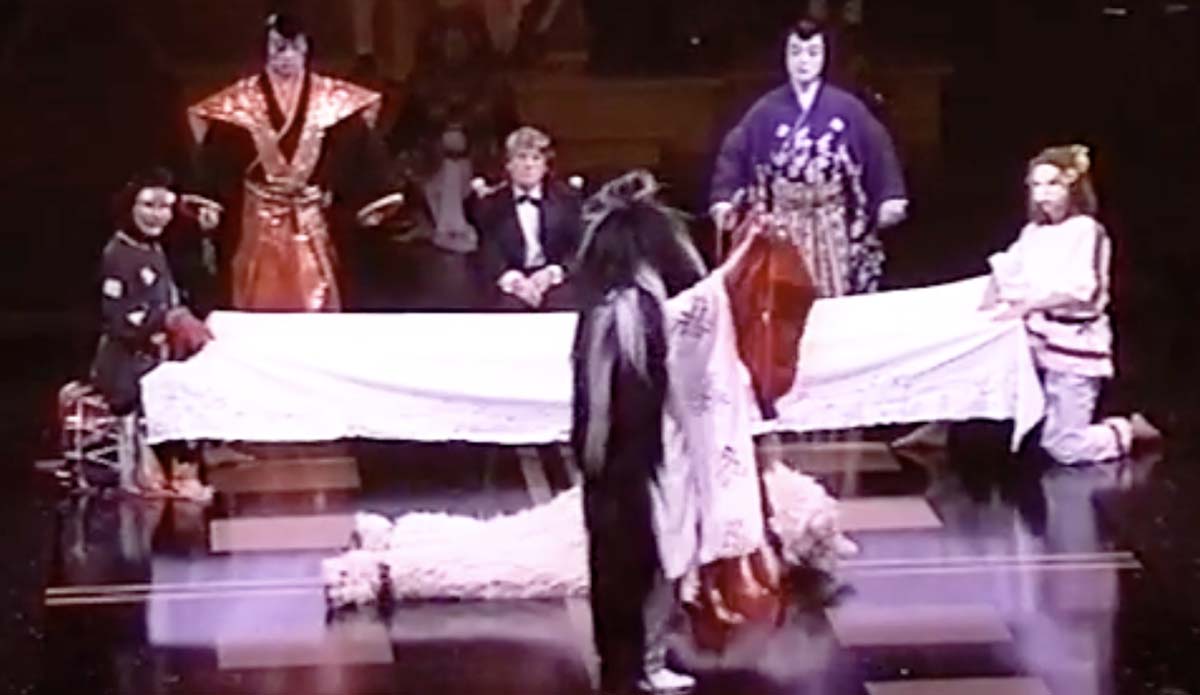
Theatrum Mundi: Copertino (1987), Bologna (1990), Londrina (1994), Copenhagen (1996)
Dialogo di Eugenio Barba e Julia Varley con partecipanti che hanno visto i film dello spettacolo.
Webinar in Spanish with simultaneous translation into English and Italian
Participation is free; registration is required at the following link: https://bit.ly/3S5Bhhy
Film of the show: https://www.youtube.com/playlist?list=PLK8iTIUPsd3ijCkYYlxE-UmvePQ89VEE2
In Latin, theatrum mundi literally means “theatre of the world.” For Eugenio Barba, it refers to an intercultural theatre in which artists from diverse traditions work together: from Asia to Japan, via Europe, Latin America, Bali, and India, to name a few.
The Theatrum Mundi ensemble was born from research in theatrical anthropology, a discipline founded by Barba with the ISTA (International School of Theatre Anthropology).
The underlying idea is that, beyond cultural differences, there exists a shared “stage professionalism” among actors and dancers from different traditions.
This is why Barba himself speaks of “Eurasian theatre,” “a technical and theoretical dimension that unites East and West through the actor’s craft.”
Performances such as Ur-Hamlet, Mythos, and Kaosmos are examples of this approach, in which different languages, music, body techniques, and rituals coexist on the same stage without being reduced to mere exoticism or folkloric demonstrations.